

Blog
Summer Sunscreen Guide: How to Protect Your Skin from UV Damage in Hot and Humid Weather

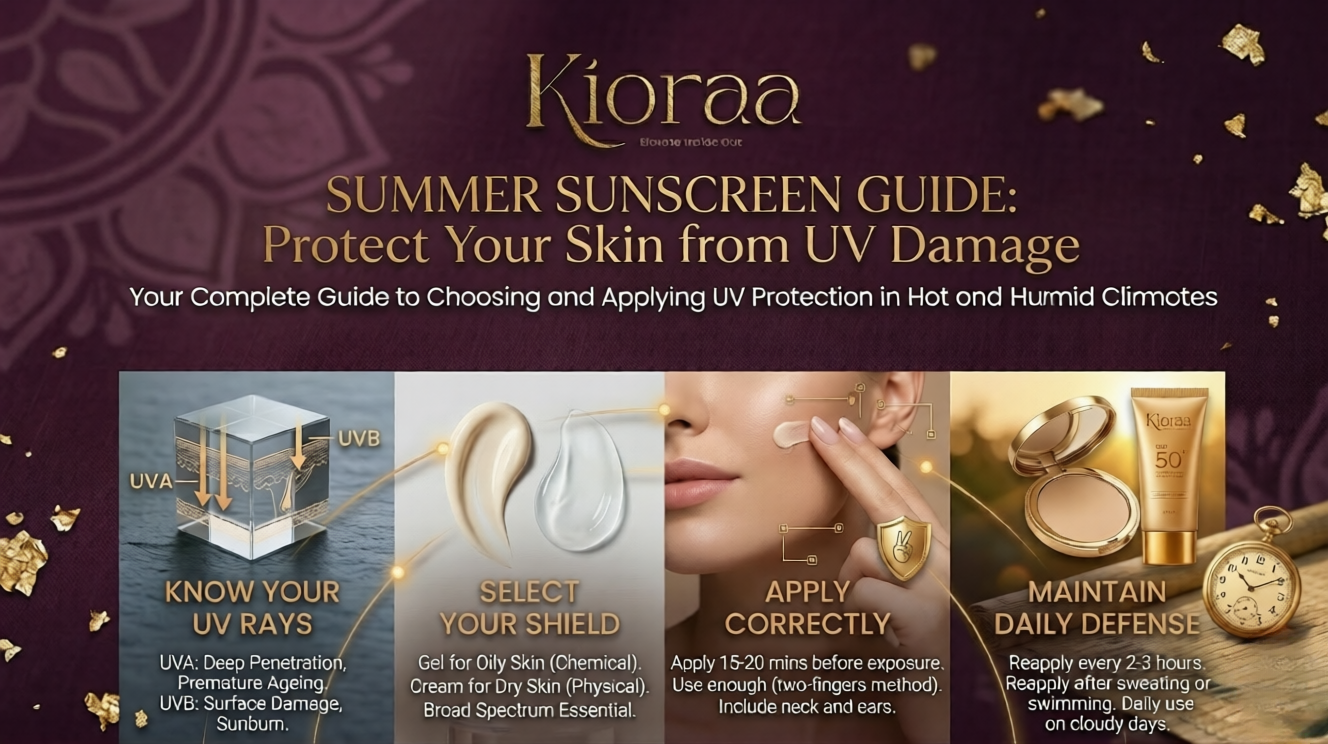
In hot, humid regions such as Bangladesh, sunscreen is not optional in skincare. It is a fundamental requirement for maintaining skin health. During the summer months, ultraviolet radiation reaches peak levels, increasing the risk of sunburn, pigmentation changes, dehydration, and premature ageing.
Daily exposure to sunlight, even for short durations, contributes to cumulative skin damage. This becomes more pronounced during outdoor activities and seasonal events. Without proper protection, the skin barrier weakens, leading to long-term concerns that are difficult to reverse.
This guide provides a comprehensive, research-aligned understanding of sunscreen, including how it works, how to choose the right formulation, and how to apply it effectively in hot and humid conditions.
Understanding Ultraviolet Radiation and Its Effects on Skin
Ultraviolet radiation consists primarily of UVA and UVB rays, both of which affect the skin in different ways.
UVA rays penetrate deeper into the skin and are responsible for long-term damage such as premature ageing, collagen breakdown, and fine lines. UVB rays affect the surface layer and are the primary cause of sunburn and visible redness.
In tropical climates, exposure to both types of radiation is consistent year-round. This makes daily protection essential, regardless of weather conditions.
Beyond visible damage, ultraviolet exposure also accelerates oxidative stress within the skin. This process weakens the skin barrier, reduces elasticity, and contributes to uneven skin tone over time.
Why Sunscreen Is Essential in Hot and Humid Climates
Humidity and heat significantly influence how the skin behaves. Increased temperature increases sweat production, while humidity stimulates oil secretion. This combination often results in clogged pores and reduced product stability on the skin.
Sunscreen in such conditions must do more than provide UV protection. It must also remain stable, lightweight, and non-comedogenic to prevent congestion.
Without proper sunscreen use in humid environments, the risk of pigmentation, tanning, and inflammation increases rapidly. Continuous exposure without protection can also slow down the skin’s natural repair processes.
Types of Sunscreens and How They Work
Sunscreens are generally categorised into two types based on their mechanism of action.
Physical sunscreens, often containing zinc oxide or titanium dioxide, form a protective layer on the skin that reflects ultraviolet radiation. They are suitable for sensitive skin but may leave a visible residue if not formulated properly.
Chemical sunscreens absorb ultraviolet radiation and convert it into heat, which is then released from the skin. These formulations tend to be lighter and more suitable for daily use in humid climates.
Broad-spectrum sunscreens provide protection against both UVA and UVB rays. This is a critical requirement for effective sun protection.
How to Choose the Right Sunscreen for Your Skin Type
Selecting the right sunscreen depends on individual skin characteristics and environmental conditions.
For oily or acne-prone skin, lightweight gel-based or water-based sunscreens are more suitable. These formulations reduce the risk of clogged pores and provide a matte finish.
For dry skin, a cream-based sunscreen with hydrating properties can help maintain moisture balance while offering protection.
Combination skin benefits from balanced formulations that provide hydration without excess oiliness. The goal is to maintain comfort while ensuring adequate protection.
In all cases, a minimum SPF of 30 is recommended for daily use, while higher SPF levels provide additional protection during extended outdoor exposure.
Correct Application: The Most Overlooked Factor
The effectiveness of sunscreen depends not only on the product but also on how it is applied.
Most individuals apply less sunscreen than required, reducing its protective capability. A sufficient amount should be used to evenly cover all exposed areas of the face and neck.
The application should take place at least 15 to 20 minutes before sun exposure. This allows the product to form an effective protective layer.
Reapplication is equally important. In hot and humid conditions, sweating and oil production can reduce the effectiveness of sunscreen. Reapplying every two to three hours ensures continuous protection.
Common Mistakes That Reduce Sunscreen Effectiveness
Several common practices can compromise sunscreen performance.
Applying sunscreen only once in the morning is insufficient in high-exposure conditions. Skipping the application on cloudy days is another mistake, as ultraviolet rays can penetrate cloud cover.
Layering incompatible skincare products may also reduce effectiveness. Sunscreen should always be the final step in a daytime skincare routine.
Using insufficient quantity or failing to cover areas such as the neck and ears further reduces protection.
Avoiding these mistakes significantly improves overall results.
Integrating Sunscreen into a Complete Skincare Routine
Sunscreen should not be treated as a standalone product. It is most effective when integrated into a consistent skincare routine.
A basic daytime routine should include a gentle cleanser, a hydrating or treatment serum, a lightweight moisturiser, and sunscreen as the final step. This structure ensures that the skin remains hydrated and protected throughout the day.
Consistency in routine application enhances both immediate protection and long-term skin health.
Long-Term Benefits of Consistent Sunscreen Use
Regular sunscreen use provides benefits beyond immediate protection. It helps maintain even skin tone, prevents the formation of dark spots, and preserves collagen structure.
Over time, consistent protection reduces visible signs of ageing and supports overall skin clarity. It also allows other skincare treatments to perform more effectively by preventing ongoing damage.
In climates with high UV exposure, sunscreen becomes one of the most impactful long-term skincare investments.
Conclusion
Sunscreen is a critical component of skincare in hot and humid environments. It protects against immediate damage, such as sunburn, while also preventing long-term concerns, including pigmentation and premature ageing.
Choosing the right formulation, applying it correctly, and maintaining consistency are essential for achieving effective results. When integrated into a structured routine, sunscreen supports overall skin health and enhances the effectiveness of other skincare steps.
A disciplined approach to sun protection ensures that the skin remains balanced, resilient, and visibly healthy throughout the summer season.
FAQs
Is sunscreen necessary every day in summer?
Yes. Daily application is essential due to consistent UV exposure.
What SPF level is recommended for daily use?
A minimum of SPF 30 is recommended, with higher levels for extended outdoor exposure.
Can sunscreen be used on oily skin?
Yes. Lightweight, non-comedogenic formulations are suitable for oily skin.
How often should sunscreen be reapplied?
It should be reapplied every two to three hours when outdoors.
Is sunscreen required on cloudy days?
Yes. Ultraviolet rays can penetrate clouds and still cause damage.
Can sunscreen replace moisturiser?
No. Sunscreen should be applied after moisturiser as a separate step.
What is the difference between UVA and UVB protection?
UVA affects deeper skin layers, while UVB primarily causes surface damage.
When should sunscreen be applied in a routine?
It should be the final step in the morning skincare routine.


One thought on “Summer Sunscreen Guide: How to Protect Your Skin from UV Damage in Hot and Humid Weather”