Blog
Closed Comedones Treatment in Bangladesh: How to Prevent Tiny Bumps in Humid Weather

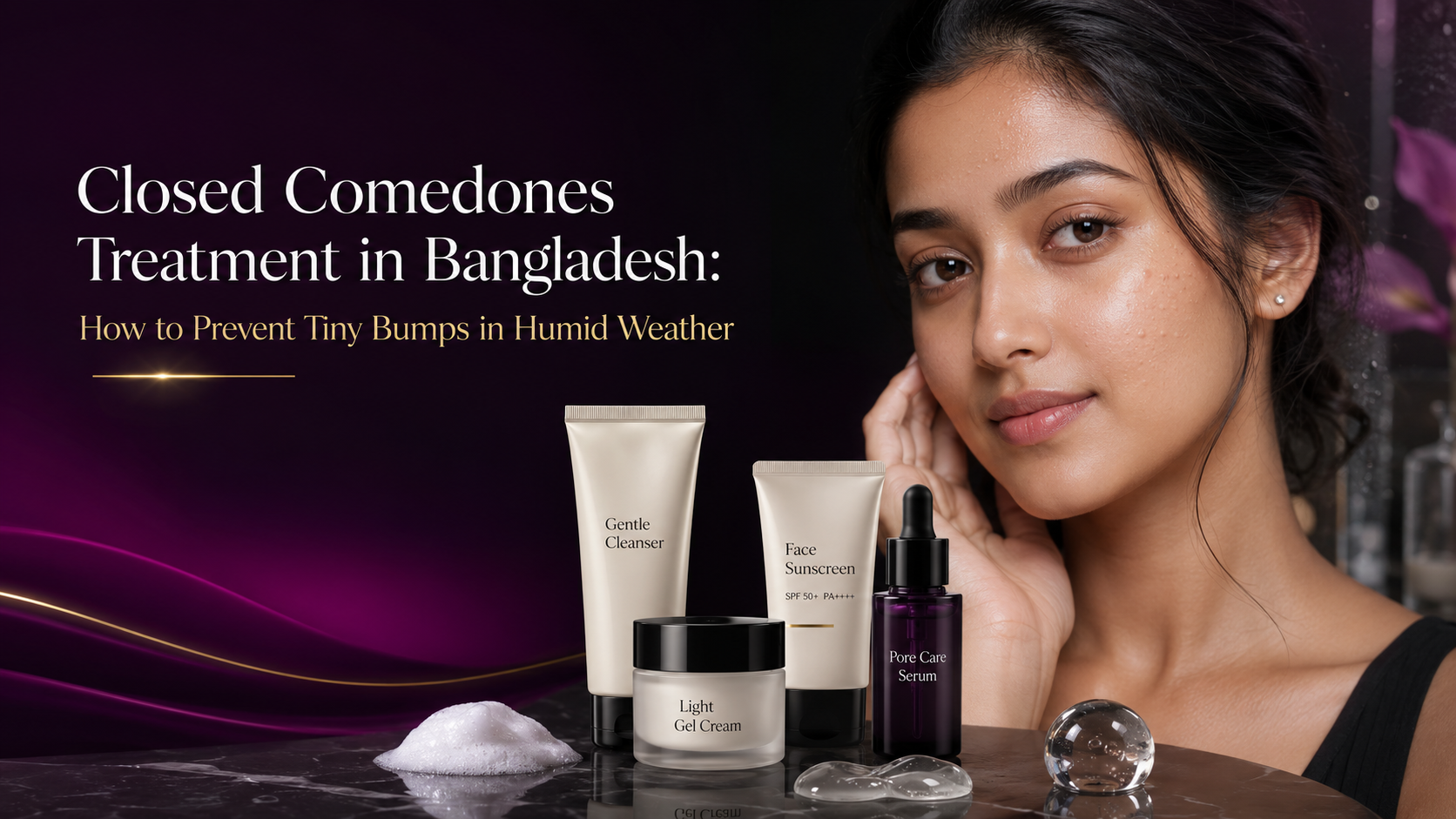
Tiny bumps and rough skin texture can feel more stubborn when the weather is hot and humid. Sweat, sunscreen, makeup, oiliness, and heavy skincare layers can all make clogged pores more noticeable, especially for oily and combination skin.
If you are looking for closed comedone treatment in Bangladesh, start with the basics before using strong products. Cleanse properly, keep layers light, introduce treatment ingredients slowly, and protect the skin barrier.
This guide explains what closed comedones are, why they often feel worse in humid weather, which routine steps help, and how to choose product textures that suit oily, combination, acne-prone, or sensitive skin.
What Are Closed Comedones?
Closed comedones are small, skin-colored or white bumps that sit under the skin. They usually do not look red, swollen, or painful like inflamed pimples.
They form when oil, dead skin cells, and keratin collect inside a pore. Since the pore opening stays closed, the bump looks raised instead of dark like a blackhead.
Many people describe them as whiteheads, clogged pores, forehead bumps, cheek bumps, or bumpy texture. They can make makeup sit unevenly and make the skin feel rough even after washing.
Closed comedones usually need consistent care. The goal is to reduce pore congestion gently, not to scrub or dry out the skin.
Why Humid Weather Can Make Tiny Bumps Feel Worse
Humid weather can make skin feel oilier, stickier, and more congested under sunscreen, moisturizer, and makeup.
In Dhaka or Chattogram, a normal day can involve heat, traffic, dust, sun exposure, and sweating. By midday, skincare and sunscreen may mix with oil and makeup. If they are not removed well at night, the skin can feel clogged.
Humidity does not directly mean you will get closed comedones. The bigger issue is how your routine performs in that weather. A moisturizer that feels comfortable in winter may feel too rich in summer. A sunscreen may give good protection but still feel heavy on oily skin.
That is why humid weather skincare should focus on balance. Keep the essential steps, but choose lighter textures and avoid unnecessary layers. For an oily feel, clogged pores, and visible texture, you can explore Kioraa’s Oil Control & Pore Care section and choose products by concern instead of guessing.
Common Causes of Closed Comedones in Bangladesh
Closed comedones can come from several routine habits. In humid weather, the common triggers are product buildup, heavy textures, incomplete cleansing, too many actives, and a stressed skin barrier.
The goal is to find what may be overloading your skin. Once you identify that, it becomes easier to adjust your routine.
Heavy or Occlusive Skincare Layers
Heavy layers can make oily or combination skin feel congested, especially during summer and monsoon.
This does not mean moisturizer is bad. It means the texture may not suit your skin, weather, or routine.
For example, thick cream, rich sunscreen, primer, and foundation together may feel too much for acne-prone skin. Your face may look shiny, feel sticky, and develop small bumps over time.
A lighter routine often works better. Try a gel moisturizer, lightweight lotion, or water-based serum if your skin gets oily quickly.
Incomplete Sunscreen and Makeup Removal
Sunscreen is important, but it should be removed properly at night. If you use sunscreen, cushion, foundation, primer, or compact powder, a quick face wash may not always remove everything.
Leftover residue can mix with sweat and oil. Over time, that may contribute to clogged pores and rough texture.
If you use sunscreen or makeup daily, build a better night cleansing step. Kioraa’s Cleansers category and Cleansing Balm or Cleansing Oil options can be useful starting points.
Over-Exfoliation and Barrier Stress
Too much exfoliation can make tiny bumps feel worse. Many people start using salicylic acid, AHA toner, retinol, acne serum, and clay mask together because they want faster results.
That can irritate the skin barrier. When the barrier is stressed, skin may feel tight, oily, dry, red, sensitive, or more reactive.
Closed comedones need patience. Start with one active ingredient at a time and give your skin time to adjust.
Closed Comedones vs Other Tiny Bumps
Not every tiny bump is a closed comedone. Some bumps look similar but need different care.
Closed comedones usually feel like small, firm bumps under the skin. They are often skin-colored or slightly white and may appear in groups.
Fungal acne-like bumps often look more uniform and may feel itchy. Milia are usually tiny, firm white bumps, often seen around the eyes or cheeks. Irritation bumps may appear after a new product and can come with redness, stinging, burning, or itching.
You do not need to diagnose everything yourself. If bumps are painful, spreading, itchy, inflamed, leaving marks, or not improving with consistent care, speak with a qualified dermatologist.
For clogged pore and acne-related product discovery, Kioraa’s Acne & Breakouts concern page can help users explore suitable categories.
Morning Routine to Prevent Closed Comedones in Humid Weather
A morning routine for closed comedones should feel light and comfortable. The goal is to clean the skin, hydrate without heaviness, and protect it from sun exposure.
In humid weather, fewer well-chosen steps often work better than a long routine that feels sticky.
Choose a Gentle Cleanser
Use a gentle cleanser to remove overnight oil and sweat. Your skin should feel clean, not tight or squeaky.
For oily and acne-prone skin, a gel cleanser can feel fresh. For combination or sensitive skin, choose something mild that does not strip the cheeks.
Cleansing should prepare the skin. It should not make your barrier weaker before the rest of your routine.
Use Lightweight Hydration
You still need hydration if you have closed comedones. Skipping moisturizer can leave skin dehydrated, and dehydrated skin may feel oilier or more unbalanced.
In humid weather, texture matters. Look for lightweight moisturizer, gel cream, fluid lotion, or water-based hydration. These usually sit better under sunscreen.
If your T-zone gets oily but your cheeks feel dry, apply a little more hydration only where needed. Kioraa’s Moisturizer category can help users compare lighter options instead of choosing a rich cream randomly.
Pick a Comfortable Sunscreen Texture
Do not skip sunscreen because of closed comedones. Choose a sunscreen texture that suits your skin and remove it properly at night.
For humid weather, oily and combination skin users often prefer lightweight, gel, watery, or non-greasy textures. If a sunscreen feels thick, pills under makeup, or makes your face very shiny, it may not be the right daily choice for your routine.
If the product label mentions non-comedogenic, lightweight, or oil-free, that can be useful for acne-prone skin. Still, personal comfort matters because every formula feels different.
To compare lighter daily options, browse Kioraa’s Face Sunscreen category and look for textures that match your skin type and routine.
Night Routine for Closed Comedones and Clogged Pores
Your night routine matters most for clogged pores. This is when you remove sunscreen, makeup, sweat, oil, and daily buildup before adding any treatment step.
Keep it simple. Cleanse well, use one suitable active if needed, then finish with light barrier support.
Remove Sunscreen and Makeup Properly
If you wear sunscreen or makeup, proper cleansing is important. A cleansing balm or cleansing oil can help break down sunscreen, primer, foundation, and long-wear base products. A gentle water-based cleanser can follow to remove the remaining residue.
This method is often called double cleansing. It can be useful, but it should still feel gentle.
Massage the first cleanser lightly. Emulsify with water if the product requires it. Rinse well before using the second cleanser. Avoid harsh towels, rough scrubs, and aggressive cleansing tools.
Add Exfoliation Slowly
Exfoliation can help with clogged pores, but too much can irritate the skin. Salicylic acid, also called BHA, is commonly used in routines for oily skin, clogged pores, and whiteheads.
Beginners should start slowly. An exfoliating product a few nights a week may be enough, depending on the formula and skin tolerance.
Do not combine exfoliating toner, acne serum, retinoid, and peeling solution in the same routine unless a professional guides you. If your skin starts burning, peeling, or feeling very tight, reduce frequency and focus on barrier care.
Kethe Barrier Calmep
A calm skin barrier helps your routine feel more comfortable. If the barrier is stressed, even useful ingredients can sting.
Look for supportive ingredients such as niacinamide, centella asiatica, panthenol, ceramides, or simple hydrating ingredients when they are available in suitable products. Always check the exact product ingredient list before buying.
Kioraa’s Sensitive Skin & Barrier Care concern page can be linked here for readers who need gentler options.
Ingredients That May Help With Closed Comedones
The right ingredient depends on your skin type, tolerance, and current routine. Closed comedones usually respond better to steady care than to aggressive product mixing.
Pick one main treatment direction first. Use it slowly and watch how your skin reacts.
Salicylic Acid (BHA)
Salicylic acid is a common choice for clogged pores, oily skin, and whiteheads. It may help reduce the appearance of pore congestion by exfoliating inside the pore area.
You may find it in cleansers, toners, serums, or spot products. For beginners, a gentle cleanser or low-frequency leave-on product may feel easier than a strong daily treatment.
Use it carefully if your skin is sensitive, dry, or already irritated. Overuse can make the barrier uncomfortable.
Retinoids
Retinoids are often used in acne routines because they support skin cell turnover and help reduce clogged pore formation over time.
They may be useful for closed comedones, but they need patience. Dryness, peeling, and irritation can happen when retinoids are introduced too quickly.
Retinoids are usually used at night and should be paired with daily sunscreen. Pregnant or breastfeeding users should consult a qualified doctor before using retinoids.
Azelaic Acid and Gentle Exfoliating Acids
Azelaic acid may support acne-prone routines and uneven tone concerns. AHAs such as glycolic acid or lactic acid can help with surface texture, but they may not be the first choice for every closed comedone routine.
If your bumps come with burning, redness, or sensitivity, do not rush into stronger acids. A simple routine with gentle cleansing, light hydration, and slow active use is safer.
Supportive Ingredients for Barrier Balance
Supportive ingredients do not directly remove closed comedones, but they can help your skin tolerate treatment better.
Niacinamide may support the skin barrier and improve the look of oiliness for some users. Centella asiatica and panthenol are common in soothing skincare. Ceramides and humectants can help with moisture balance.
These ingredients are helpful when your skin feels oily but dehydrated, or when exfoliating products make your skin feel tight.
If you want to compare active ingredients and barrier-supporting formulas, Kioraa’s Serums & Treatments category is a useful place to start.
Product Texture Guide by Skin Type
Product texture can decide whether a routine feels comfortable in humid weather. A good ingredient can still feel wrong if the formula is too heavy for your skin.
Choose products by matching your skin type, concern, and daily comfort.
Oily and Acne-Prone Skin
Oily and acne-prone skin usually does better with lighter layers. Gel cleansers, watery serums, light gel moisturizers, and non-greasy sunscreens often feel more comfortable.
Avoid layering too many rich products together. If your face becomes shiny within an hour, your morning routine may need fewer layers or lighter textures.
For this skin type, Oil Control & Pore Care and Acne & Breakouts can be useful concern-based browsing options.
Combination Skin
Combination skin often has an oily T-zone and drier cheeks. You may not need the same amount of product everywhere.
Use light hydration across the face, then add a little extra moisturizer only to dry areas. Keep heavy creams away from the areas where you usually get closed comedones.
If bumps appear mostly on the forehead or nose area, review your sunscreen, hair products, and cleansing routine.
Sensitive Skin
Sensitive skin needs a slower approach. Do not start salicylic acid, retinoids, exfoliating toner, and acne masks at the same time.
Choose a gentle cleanser, simple moisturizer, and sunscreen that does not sting. Add active ingredients one by one.
Fragrance-free or low-irritation formulas may feel more comfortable for some sensitive users, but always check the product label.
Makeup Compatibility for Tiny Bumps
You can wear makeup if you have closed comedones, but texture and removal matter.
In humid weather, heavy primer, thick foundation, and repeated powder touch-ups can feel congesting for some skin types. If makeup sits over bumpy texture, adding more layers can make the texture look more obvious.
Try lighter base products and cleanse properly at night. If you wear makeup daily for university, office, or events, your night routine needs to be consistent.
Also check your brushes, sponges, and puffs. Dirty tools can transfer oil, old product, and residue back onto the skin.
Mistakes That Can Make Closed Comedones Worse
The biggest mistake is trying to fix tiny bumps too aggressively. Closed comedones need consistency, not punishment.
Avoid these common mistakes:
Using too many actives at once.
Scrubbing bumps with harsh exfoliators.
Skipping moisturizer because your skin is oily.
Using thick creams in humid weather without checking comfort.
Not removing sunscreen or makeup properly.
Changing products every few days.
Picking or squeezing closed comedones.
Letting hair oil or styling products touch the forehead and cheeks.
A better approach is to simplify your routine for a few weeks. Keep cleanser, lightweight moisturizer, and sunscreen steady. Then add one treatment product slowly if your skin can tolerate it.
When Should You See a Dermatologist?
See a qualified dermatologist if your bumps are painful, itchy, spreading, inflamed, leaving scars, or not improving with a careful routine.
You should also get professional advice if you are unsure whether the bumps are closed comedones, fungal acne-like bumps, milia, an allergic reaction, or another skin concern.
Skincare can support mild texture and clogged pore concerns. Persistent acne, deep pimples, repeated breakouts, or worsening marks may need professional care.
Final Routine Tips for Humid Weather in Bangladesh
For closed comedone treatment, Bangladesh users can start with one practical decision: make the routine lighter, cleaner, and more consistent.
In the morning, use a gentle cleanser, lightweight hydration, and comfortable sunscreen. At night, remove sunscreen and makeup properly, then use one suitable treatment ingredient slowly. Avoid heavy layering, over-exfoliation, and frequent product switching.
If you are not sure where to begin, explore Kioraa’s Cleansers, Serums & Treatments, Moisturizer, Face Sunscreen, Acne & Breakouts, and Oil Control & Pore Care sections. Choose products based on your skin type, texture preference, and current routine instead of buying everything at once.
Healthy-looking skin in humid weather usually comes from small routine improvements done consistently.